

Offshore Wind Gains Momentum Across Europe
The European offshore wind sector has entered the year on a more confident footing. A series of successful auctions across several countries has revived investor appetite, while political cooperation around the North Sea has reinforced long-term ambitions for the industry.
This renewed momentum coincides with the publication of two major initiatives by the European Commission: the EU Ports Strategy and the EU Maritime Industrial Strategy. Together, they aim to strengthen Europe’s maritime ecosystem so that ports, vessels and shipyards can support the rapid deployment of offshore wind capacity in the coming decade.
The stakes are high. Europe’s energy system remains highly vulnerable to geopolitical tensions. Since the escalation of conflict in the Middle East on 28 February, natural gas prices in Europe have surged by more than 40%, reaching their highest level since 2023. Such volatility continues to weigh heavily on Europe’s industrial competitiveness and economic stability.
Offshore Wind: A Strategic Asset for Energy Security
Against this backdrop, offshore wind has become one of Europe’s most reliable tools to reduce dependence on imported fossil fuels.
Investment figures reflect this strategic shift. In 2024 alone, Europe invested €22.5 billion in new offshore wind projects. The continent currently operates 39 GW of offshore wind capacity, and according to the latest WindEurope Outlook, that figure is expected to rise to 73 GW by 2030.
Recent developments have strengthened industry confidence. Large-scale auctions in Poland and the United Kingdom have successfully awarded several gigawatts of new capacity. Meanwhile, the North Sea Summit held in Hamburg has provided additional political momentum for accelerating deployment.
During the summit, North Sea countries committed to implementing two-sided Contracts for Difference (CfDs) covering 10 GW of offshore wind capacity per year between 2031 and 2040. Governments also pledged to remove regulatory barriers that limit the development of Power Purchase Agreements (PPAs), which play a key role in financing renewable energy projects.
In return, Europe’s wind industry committed to mobilising €1 trillion in economic activity, creating 91,000 additional jobs, and investing €9.5 billion across the supply chain, including manufacturing facilities, port infrastructure and specialised vessels.
The Growing Bottleneck in Europe’s Offshore Supply Chain
While manufacturing investments are already underway across Europe, the offshore wind supply chain depends heavily on one critical factor: maritime infrastructure.
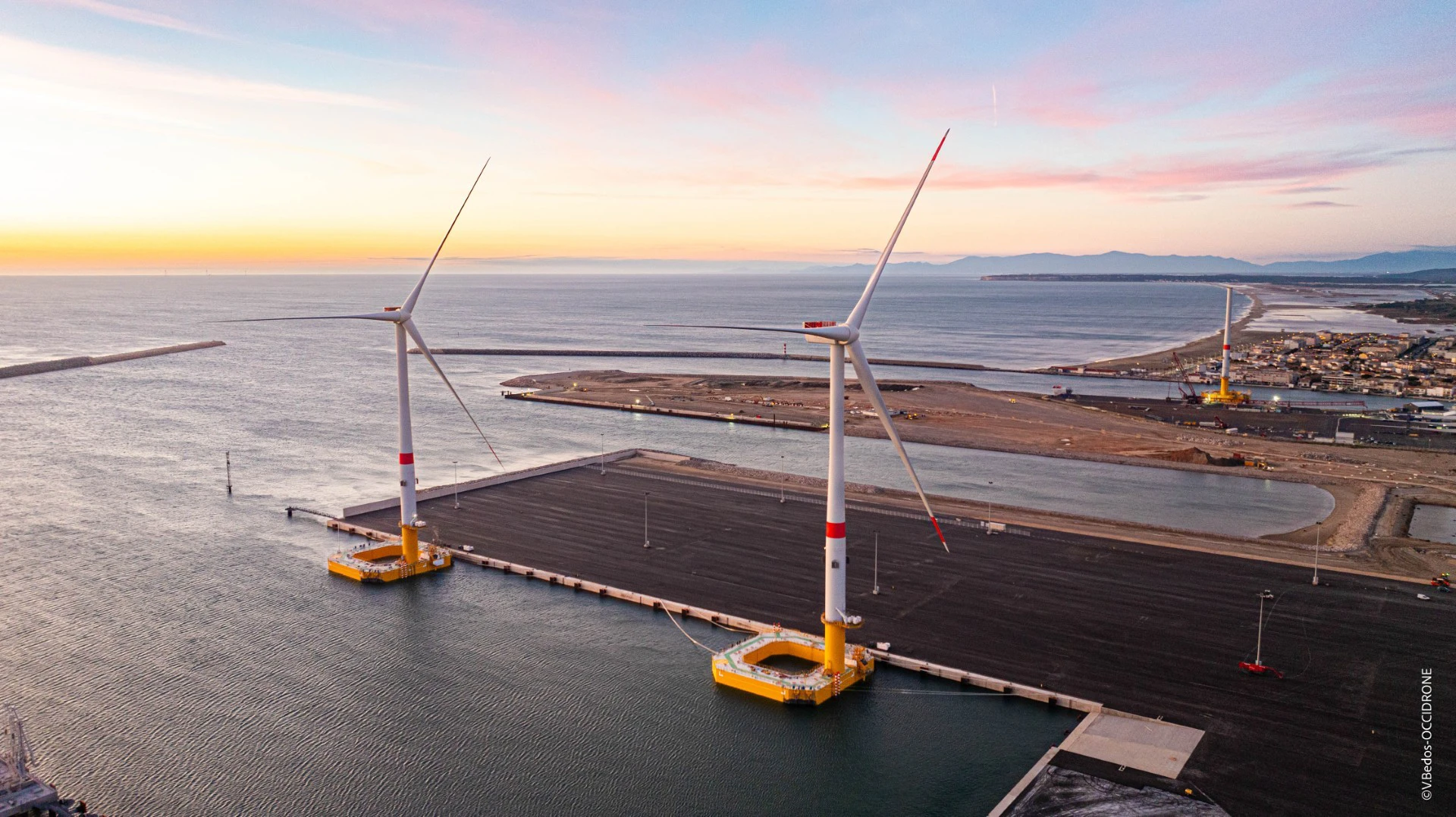
Every major turbine component — blades, towers, nacelles and foundations — passes through ports before reaching offshore construction sites. As turbine sizes increase dramatically, ports must adapt. Reinforced quays, deeper berths and large logistics areas are now essential to store and handle these massive structures.
The challenge will become even greater as floating offshore wind projects begin to scale up. In that scenario, ports will evolve into full assembly hubs where turbines are constructed, stored and deployed before being towed to sea.
However, Europe’s port capacity is already lagging behind projected demand. Industry estimates indicate that the continent needs to invest an additional €2.1 billion, on top of the €4.7 billion already spent in recent years, to keep pace with offshore wind development.
EU Ports Strategy: Progress, but Funding Still Needed
The newly released EU Ports Strategy acknowledges this urgent investment gap. The initiative calls on Member States to align port infrastructure upgrades more closely with upcoming offshore wind projects and to accelerate permitting procedures for port expansions.
To support these developments, the strategy considers port grid infrastructure to be of overriding public interest, a designation intended to simplify administrative procedures. It also encourages governments to reduce delays in grid connections and accelerate the electrification of port facilities.
These measures represent an important step forward. However, industry stakeholders warn that regulatory improvements alone will not be enough.
Between 2021 and 2024, ports received nearly €90 million in funding through the Connecting Europe Facility (CEF). Although the next CEF Transport budget is expected to be significantly larger, offshore wind-related infrastructure is still not clearly defined as a core priority.
The European Commission has emphasised that private investment will play a central role. Yet large-scale private capital is unlikely to flow without stronger public instruments to reduce financial risk.
EU Maritime Strategy: Protecting Europe’s Shipbuilding Industry
Alongside the ports initiative, the EU Maritime Industrial Strategy seeks to reinforce Europe’s shipbuilding capabilities and safeguard its industrial base.
Rather than focusing primarily on subsidies, the strategy aims to ensure fair competition with shipyards outside Europe. The EU plans to closely monitor policies from third countries that could distort global shipbuilding markets and lead to unfair trade practices.
Another key measure involves creating a coordinated pipeline of public orders, which would provide shipyards with greater visibility and stable demand. The strategy also proposes faster permitting procedures to modernise and expand shipyard facilities.
Industry representatives broadly welcome these initiatives but stress that additional financial support will still be necessary to maintain global competitiveness.
Building Europe’s Offshore Wind Fleet
A central component of the maritime strategy is the protection and development of Europe’s offshore wind vessel manufacturing sector.
The EU plans to prioritise segments where Europe already has strong technological expertise and industrial capacity. These include offshore support vessels and cable-laying ships, both of which are essential for installing and maintaining offshore wind farms.
To strengthen coordination across the sector, the Commission will establish a new Industrial Maritime Value Chain Alliance, designed to identify investment opportunities and reinforce cooperation between manufacturers, ports and energy developers.
Delivering Europe’s Energy and Industrial Strategy
Europe’s offshore wind ambitions are increasingly tied to its broader goals of energy security, industrial competitiveness and climate neutrality.
But reaching these targets will require more than new wind farms. It will depend on an entire maritime ecosystem capable of supporting large-scale deployment — from ports and shipyards to specialised vessels and logistics networks.
Industry organisations such as WindEurope are continuing to work with EU institutions, Member States and private stakeholders to ensure that this infrastructure is ready in time. Without stronger ports and shipyards, Europe’s offshore wind expansion — and the energy security it promises — could face significant delays.