

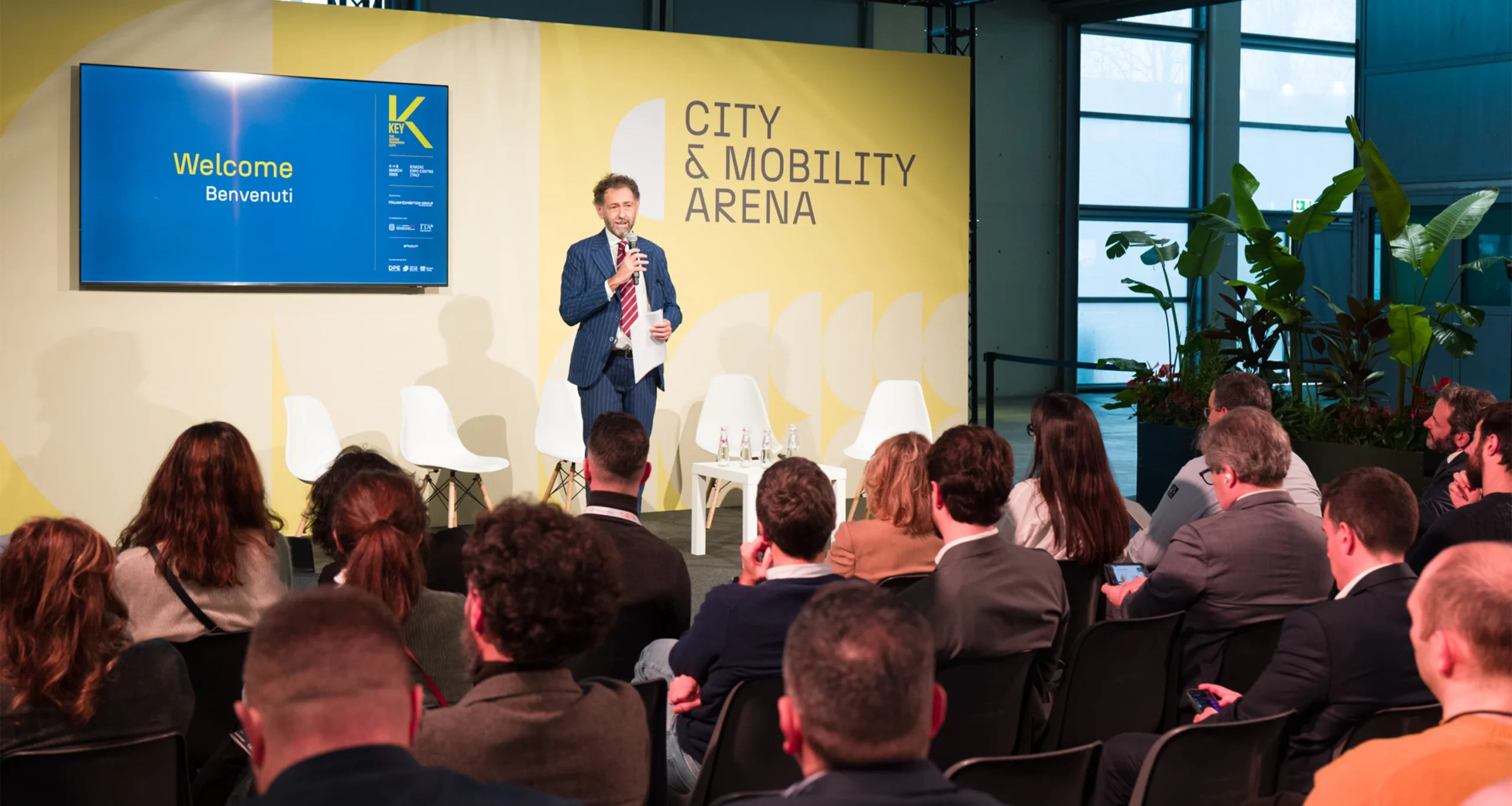
Major transformations in the global energy market took centre stage at KEY 2026, the energy transition event organised by Italian Exhibition Group. During the KEY Energy Summit, policymakers, industry leaders and international organisations examined the forces reshaping electricity systems across Europe, from the rise of renewable energy to the growing impact of data centres and artificial intelligence.
The summit featured the presentation of the study “Energy transition, between global scenarios, technologies and governance”, conducted by Althesys (TEHA Group) and unveiled in the presence of Gilberto Pichetto Fratin, Italy’s Minister for the Environment and Energy Security. The research offers an in-depth analysis of the European electricity system, exploring policy developments, infrastructure needs, emerging technologies and the role of digital transformation in the future energy mix.
One of the most striking findings concerns the rapid expansion of data centres. In Italy alone, requests to connect new data centres to the national grid have reached 69 GW. While these facilities accounted for less than 2% of the country’s electricity demand in 2024, forecasts suggest they could represent between 7.4% and 12.7% of final electricity consumption by 2035, according to Snam–Terna 2024 data. This surge reflects the growing influence of artificial intelligence, cloud computing and digital infrastructure on energy demand.
Another topic addressed at the summit was the ongoing debate over the decoupling of gas prices from electricity prices, as well as the evolution of Italy’s single national electricity price system, both crucial issues for stabilising energy markets and encouraging renewable investments.
Following the research presentation, a two-session roundtable gathered leading representatives of the energy sector and industry associations. Participants included Gianni Vittorio Armani, President of Elettricità Futura; Andrea Cristini, President of ANIE Rinnovabili; Simone Togni, President of ANEV; Paolo Rocco Viscontini, President of ITALIA SOLARE; Paolo Picco, President of FEDERIDROELETTRICA; Giacomo Cantarella, President of ASSOESCO; Dario Di Santo, Director of FIRE; Alberto Dossi, President of H2IT; Attilio Piattelli, President of Coordinamento FREE; and Fabio Pressi, President of Motus-E.
The summit opened with institutional remarks from Corrado Peraboni, CEO of Italian Exhibition Group, and Maria Sicilia Salvadores, Head of the Electricity Systems & Markets Division at the International Energy Agency (IEA). The event concluded with insights from Vinicio Mosè Vigilante, CEO of GSE, and Lennart van Walsum, Director for EMEIA & Americas at the Global Solar Council.
Hydrogen Cooperation Between Italy and Germany Gains Momentum
Hydrogen also took centre stage during an international event dedicated to European cooperation on hydrogen technologies. Organised by Hannover Fairs International, Hydrogen + Fuel Cells Europe, ITKAM, Die Gas- Und Wasserstoffwirtschaft and H2IT, the session brought together policymakers and industry experts to discuss best practices and future strategies.
The event opened with remarks by Benjamin Hanna, Deputy Ambassador of Germany to Italy. Keynote speeches followed from Fabrizio Penna of Italy’s Ministry for the Environment and Energy Security (MASE), Patricia Schikora of Germany’s Federal Ministry for Economic Affairs and Energy, and Luigi Crema, Chair of the Hydrogen Europe Research Board and Vice President of H2IT.
Speakers outlined the current status of hydrogen development across Europe, highlighting the importance of cross-border infrastructure, industrial investment and research collaboration to accelerate deployment.
The session concluded with a roundtable discussion on global cooperation in the hydrogen sector. Participants included Giuseppe Galata (VNG Italia), Raoul Raffagli (FluxSwiss), Luca Rofi (Ansaldo Green Tech) and Anna Monticelli (Intesa Sanpaolo), who shared insights into successful international partnerships shaping the hydrogen market.
Financing and Construction: The New Phase of Renewable Energy
The rapid growth of renewable energy projects is creating new challenges for infrastructure development and financing. These issues were explored during the conference “EPC and Finance: the new phase of renewables”, organised by Elemens and KEY.
The discussion began with an overview of the Italian renewable energy market. In 2025, authorised renewable projects reached 9.5 GW for solar power and 1.5 GW for wind energy, confirming the country’s accelerating transition toward clean electricity generation. The session also examined regulatory developments, construction challenges and financing conditions affecting renewable energy and battery storage projects.
A series of roundtables brought together policymakers, industry leaders and financial institutions. The institutional panel featured Federico Boschi, Head of the Energy Department at MASE; Davide Valenzano, Director of Regulation and Markets at GSE; and Mauro Caprabianca, Head of Territorial Planning at Terna. Discussions focused on evolving market mechanisms such as FER-X, FER-Z, MACSE and Capacity mechanisms, as well as the broader impact of geopolitical tensions and the Net Zero Industry Act (NZIA).
Additional panels examined the operational challenges facing EPC contractors in building renewable plants and energy storage systems, while financial experts analysed issues such as bankability, leverage and credit flexibility for large-scale clean energy projects.
Innovation at the Heart of the Energy Transition
Innovation was also recognised at KEY 2026 through the Lorenzo Cagnoni Innovation Award, which honours technological excellence and breakthrough solutions supporting the energy transition.
Seven exhibiting companies received awards for their advanced projects across key sectors including solar, wind, hydrogen, energy efficiency, storage, e-mobility and sustainable urban solutions. The winners were IGreen System, Meteodyn, Clivet, CRRC Zhuzhou Institute, Alperia Green Future, Dragone Energy and ENEA.
In parallel, seven start-ups from the event’s Innovation District were recognised for their pioneering technologies. The selected start-ups included Taleta, Northernlight, I-Tes, CO2CO, AI-Cure, Powandgo and Enercade, highlighting the growing role of emerging companies in accelerating energy innovation.
Electric Vehicle Charging Networks: Italy and Europe at a Crossroads
As electric mobility expands across Europe, the development of a reliable charging infrastructure is becoming a strategic priority. This topic was the focus of the conference “The electric car charging network: the state of the art in Italy and Europe”, organised by GSE and Motus-E.
The session opened with remarks from Fabio Pressi, President of Motus-E, and brought together leading experts including Chris Heron, Secretary General of E-mobility Europe; Michele Benini, Director of the Energy Systems Development Department at RSE; Francesco Naso, Secretary General of Motus-E; Mario Spagnoli, Head of Digital Platforms and Sustainable Mobility at GSE; and Matteo Gizzi, Head of E-mobility Market Intelligence at Motus-E.
Participants examined the evolving role of Charge Point Operators (CPOs) and Distribution System Operators (DSOs), as well as tariff structures, infrastructure deployment and the integration of charging stations into existing fuel networks.
The debate also addressed Italy’s National Infrastructure Plan for the Charging of Electrically Powered Vehicles (PNIRE) and motorway tenders aimed at expanding the charging network. Experts highlighted both the opportunities and the structural challenges that will determine how quickly electric mobility can scale across Italy and the wider European market.
Industry representatives from organisations such as ARERA, IONITY, IPlanet, Edison Next, Repower and Enel X Way contributed to the discussion, outlining future scenarios that could define the next phase of electric mobility development.