

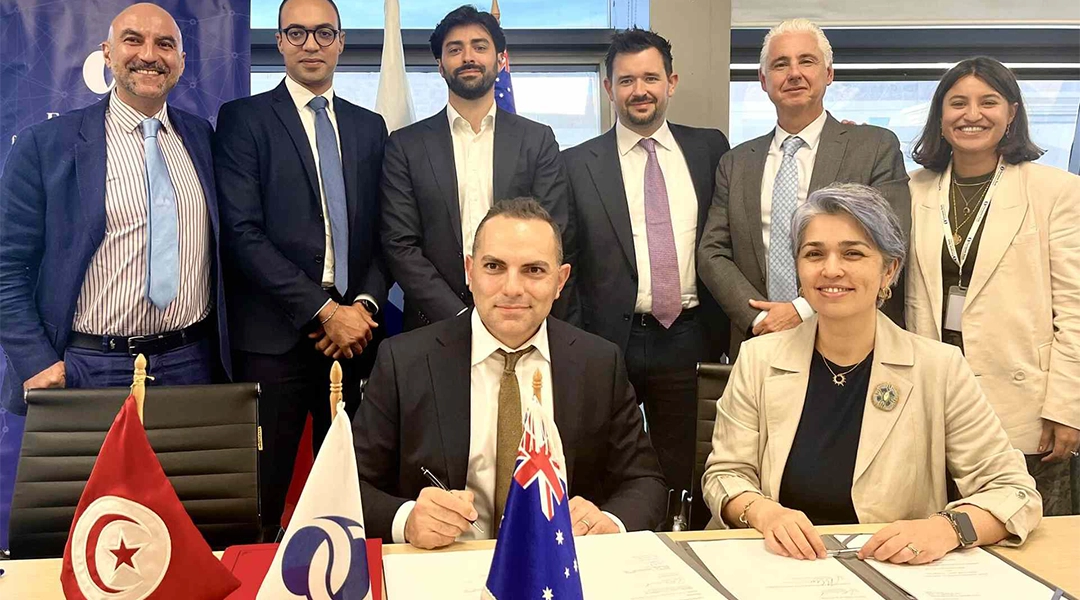
The European Bank for Reconstruction and Development (EBRD) has awarded an A$1.8 million grant to fertilizer company PhosCo to advance the Gasaat Phosphate Project in Tunisia. The financial backing will be combined with a A$1.1 million investment from PhosCo’s Managing Director, Taz Aldaoud, bringing the total funding package to A$2.9 million. This capital injection is aimed at accelerating technical work and advancing project optimization.
Strategic Investment for Exploration and Infrastructure
The new funding will enable further exploration of low-strip deposits and refinement of the project’s processing flowsheet, a key step toward improving efficiency and reducing production costs. PhosCo also plans to assess downstream opportunities and invest in supporting infrastructure, particularly water management and transport facilities, both critical to the long-term success of the operation.
The EBRD agreement also includes a two-tranche option package, granting the bank 60 million options in the first tranche and 90 million options in the second. If exercised, these options could bring an additional A$7.5 million to the project, significantly reinforcing its next phase of development.
A Long-Life, Cost-Competitive Project
PhosCo Managing Director Taz Aldaoud said the combined investments “will be used to incorporate the outstanding KM discovery into Gasaat’s already significant JORC Resource of 146.4 million tons at 20.6% P₂O₅, underpinning a cost-competitive, long-life project.” This statement reflects the strategic importance of the KM discovery, which strengthens the project’s resource base and future profitability.
Gasaat Project: A Pillar of Tunisia’s Phosphate Sector
The Gasaat Phosphate Project is projected to produce 68 million tons of phosphate concentrate over a 46-year mine life, with an average annual production of 1.5 million tons. Such production capacity places it among the key phosphate developments in North Africa. With fieldwork already restarted on site, PhosCo is advancing towards feasibility milestones that could attract further foreign investment into Tunisia’s mining sector.