

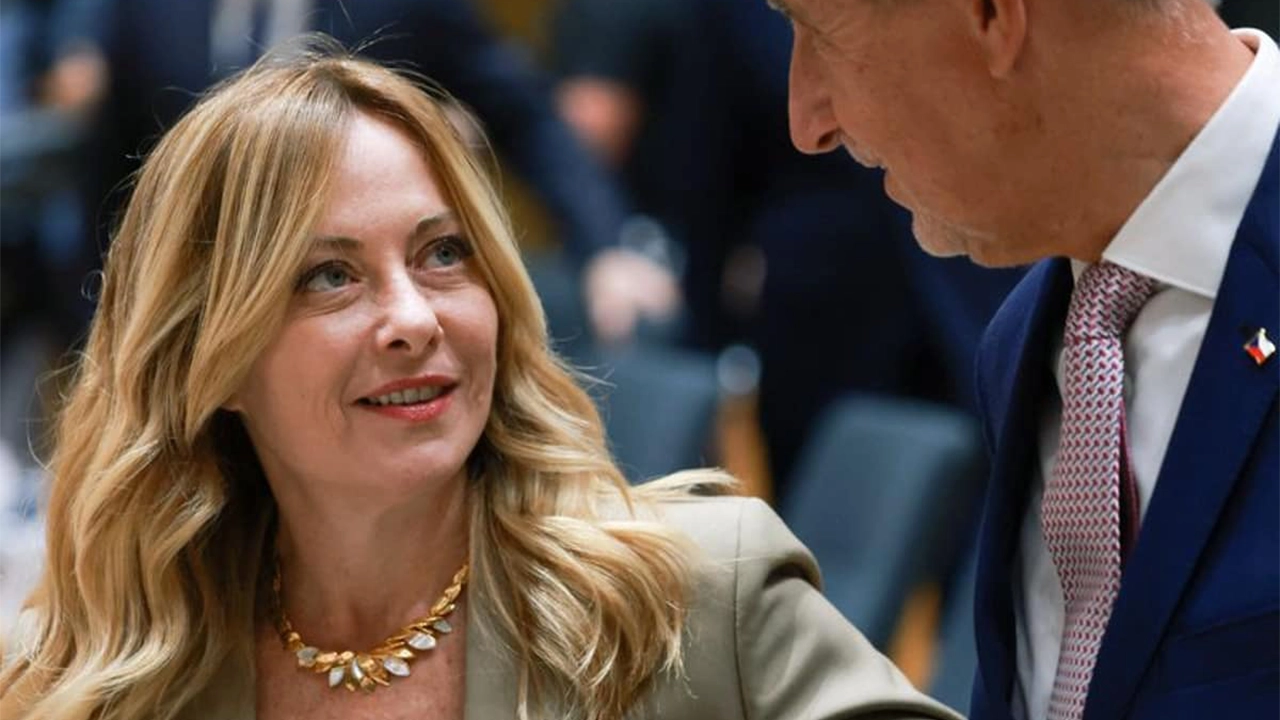
Italian Prime Minister Giorgia Meloni and Czech Prime Minister Andrej Babiš met in Prague on Tuesday to finalise joint proposals aimed at containing rising energy costs across the European Union. Their headline demand: postponing the extension, planned for 2028, of the bloc’s carbon market to heating and road transport fuels.
The two leaders want to present their reform package at the EU summit on 15-16 October, according to Italian officials cited by Reuters. The move comes as global supply disruptions linked to the wars in Ukraine and the Middle East feed voter discontent over the rising cost of living across Europe.
At the heart of the dispute: ETS2
The row centres on the EU’s emissions trading system, a cap-and-trade mechanism that requires power plants and industry to buy CO2 permits when they pollute.
A second phase, known as ETS2, is due to launch in 2028. It would extend carbon pricing to fuels used for transport and heating. Rome and Prague argue this would add to the burden on consumers already struggling with high energy bills.
Methane and allowances: the rest of the package
Beyond delaying ETS2, Italy and Czechia ask the EU to temporarily suspend methane regulations which, according to Italian officials, could complicate efforts to secure alternative gas suppliers from January.
They also want the EU to use its market stability reserve to release additional carbon allowances, in order to curb price spikes weighing on businesses.
Madrid, Lisbon and Luxembourg push another way
The Italian-Czech initiative immediately met a rival proposal from Spain, Portugal and Luxembourg. In a letter dated 25 September, their energy ministers urged the EU to set binding renewable energy targets for 2040.
The EU currently has a 2030 target requiring at least 42.5% of energy consumption to come from renewable sources. The figure stood at 26.2% in 2025. No equivalent target exists for 2040.
“Renewables are proven and competitive solutions that can be deployed at scale and on time within the EU,” the three countries wrote to EU Energy Commissioner Dan Jørgensen, according to Reuters. Spanish Energy Minister Sara Aagesen stressed that investors need clear signals on the bloc’s long-term direction.
Nuclear, another sticking point
The renewables-versus-carbon debate is further complicated by a parallel split over nuclear power. Several EU governments, led by France and Sweden, want any 2040 target framed around “clean energy” rather than renewables alone, which would let nuclear count towards it.
“We absolutely must see nuclear as part of the solution,” Finnish Climate Minister Sari Multala said on Tuesday at a meeting of EU energy ministers. Countries such as Austria and Luxembourg remain firmly opposed, citing safety and nuclear waste concerns.
An October summit under political pressure
With general elections due next year in Italy, France and Spain, these competing visions set the stage for a heated debate at the October summit over how the EU intends to reconcile its climate ambitions with political pressure from rising energy prices.