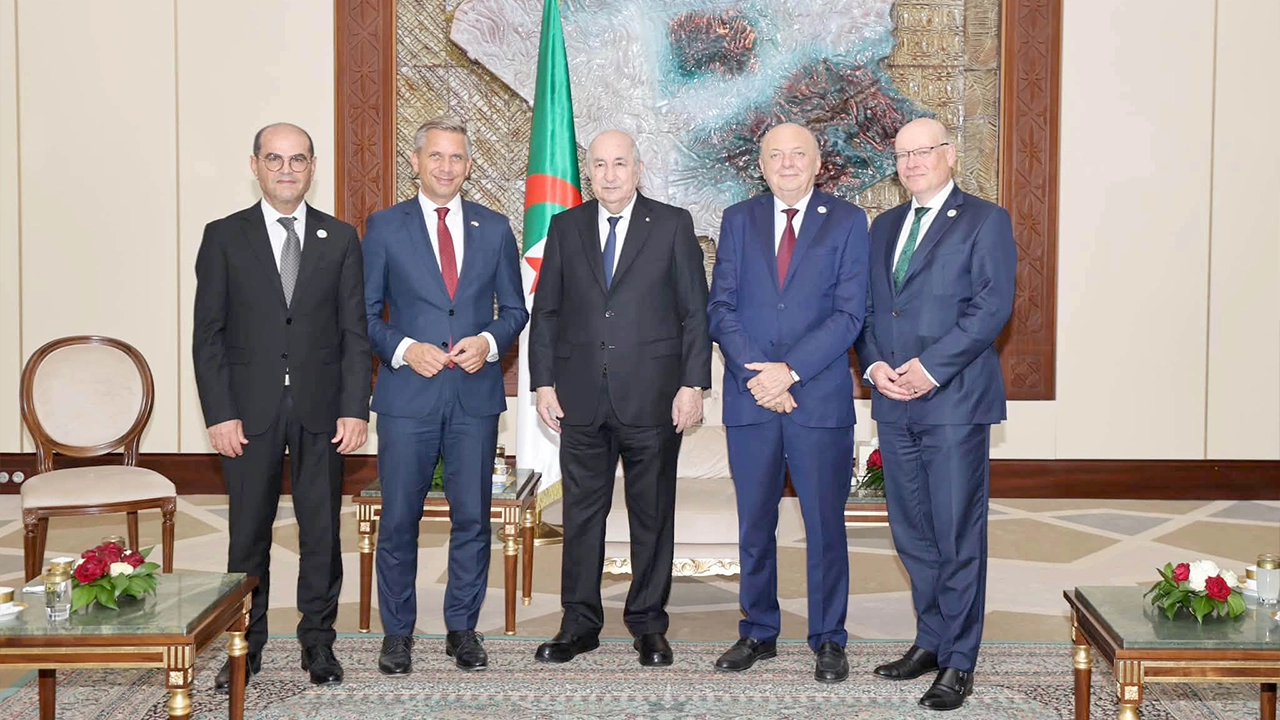
Green hydrogen cooperation between North Africa and Europe has taken another step forward. Yesterday in Algiers, Algeria, Tunisia, Italy, Austria and Germany moved their cooperation on the SoutH2 Corridor to a new stage, aiming to build a genuine energy bridge between the two regions.
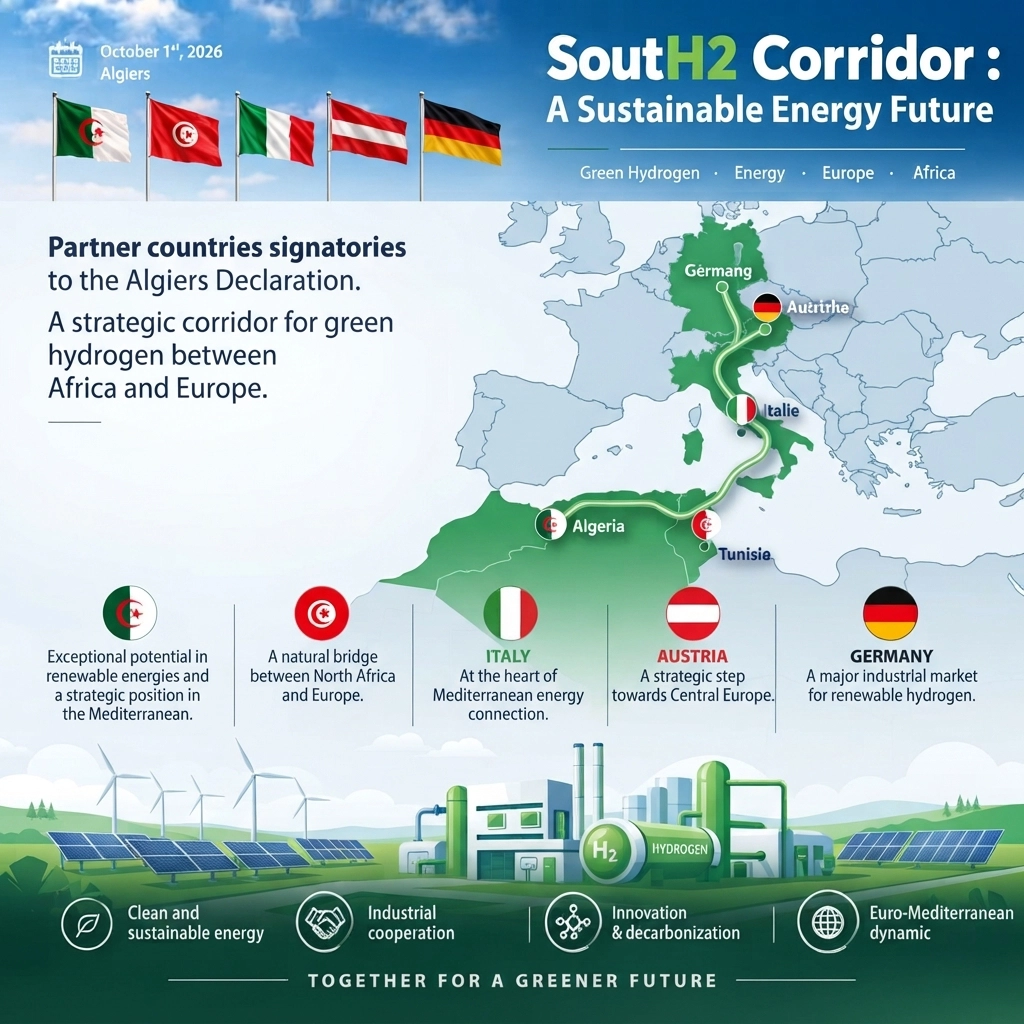
A corridor from Algeria to Germany
The goal is to scale up green hydrogen production in Algeria and help deliver it to Europe. The route runs through Tunisia, Italy and Austria before reaching Germany.
The project is not new: a joint declaration of political intent was already signed in Rome in January 2025. It relies on a transport network of roughly 3,300 kilometres linking North Africa to Germany.
Five countries, one value chain
The initiative draws its strength from the complementary roles of the countries involved, all linked along a single value chain:
- Algeria brings considerable renewable energy potential and a strategic position in the Mediterranean.
- Tunisia is the key connection point between North Africa and Europe.
- Italy sits at the heart of the Mediterranean energy interconnection.
- Austria is a strategic stage of the corridor towards Central Europe.
- Germany is a major industrial market for renewable hydrogen.
The Algiers Ministerial Declaration
Beyond infrastructure, an industrial, energy and Euro-Mediterranean partnership is taking shape. The signing of the Algiers Ministerial Declaration marks a new milestone, with a commitment to strengthen dialogue among the five countries.
It is a strategic partnership to produce, transport and add value to green hydrogen between North Africa and Europe, supporting clean and sustainable energy, industrial and energy cooperation, innovation and decarbonisation, and a Euro-Mediterranean and African dynamic.
The signatories also intend to support the creation of a dedicated corridor secretariat, backed by UNIDO, the United Nations Industrial Development Organization.
Green hydrogen as a cooperation issue
Green hydrogen is gradually becoming more than a technological ambition: it is turning into a matter of cooperation between territories, industry and energy players. In this dynamic, Algeria holds a central place.
The SoutH2 Corridor shows what Europe and North Africa can build together when they pool their resources, infrastructure, technologies and expertise. The energy future is also built through partnerships, and in Algiers, another stone has just been laid.