

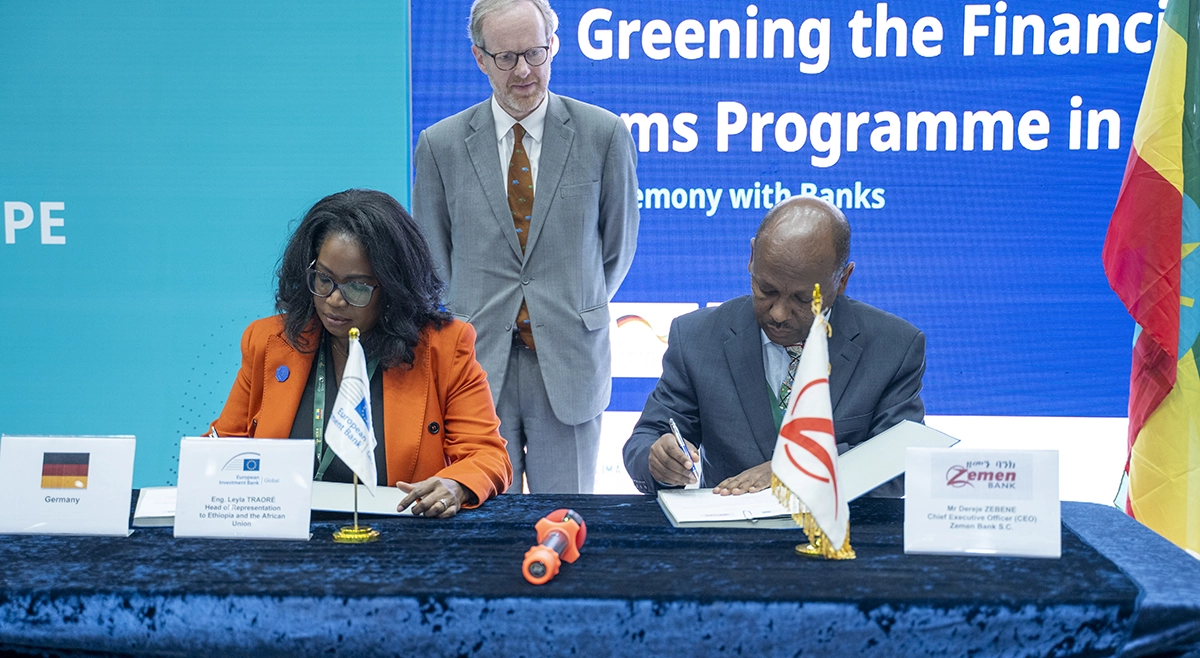
The European Investment Bank’s development arm, EIB Global, has initiated a landmark technical assistance program in Ethiopia, signing agreements with three major local financial institutions: Zemen Bank SC, Dashen Bank SC, and Hibret Bank. Announced during the second edition of the Africa Climate Summit in Addis Ababa, this operation is a crucial first for the country under the EIB’s Greening Financial Systems Programme. The goal is clear: to equip these banks with the expertise to fully integrate climate-related risks into their operations and significantly expand green lending to Ethiopian enterprises. This collaboration is set to be a cornerstone for Ethiopia’s ambitious goal of achieving a sustainable, net-zero economy by 2050, as detailed in its Long-Term Low Emission Development Strategy.
Strengthening Institutional Capacity for Climate Resilience
The technical assistance is comprehensive, focusing on enhancing the banks’ institutional capacity through tailored programs and direct technical support. A core component involves strengthening the ability of Zemen, Dashen, and Hibret Banks to identify, assess, and manage climate-related risks, ensuring these factors are integrated into their business strategies and daily operations. This means the banks will be better positioned to understand how climate change—including extreme weather events like floods and droughts—could impact their clients and will encourage investments that boost resilience. Furthermore, their capacity will be strengthened to analyze the potential effects of changing international climate policies on businesses, particularly export-dependent industries. This program is being funded by the German government through the dedicated International Climate Initiative (IKI Fund) and is closely coordinated with the NDC Partnership.
The importance of this initiative was underscored by Leyla Traoré, EIB Head of Representation to Ethiopia & the African Union, who stated: “Through EIB Global’s partnership with Ethiopian banks, we aim to contribute to the building of a more climate resilient financial system and support the country achieve its Nationally Determined Contributions (NDCs) towards the Paris Agreement goals.” Adding to this, Jochen Flasbarth, Germany’s State Secretary at the Federal Ministry for the Environment, Climate Action, Nature Conservation and Nuclear Safety, highlighted the necessity of such programs: “The International Climate Initiative (IKI) Germany is supporting initiatives such as the EIB’s Greening Financial Systems programme to help building climate aligned financial systems and shaping resilient, sustainable financial systems that serves the people.”
A Continental and National Framework for Green Development
This technical assistance program in Ethiopia is the third on the African continent, following similar successful agreements in Kenya and Rwanda. EIB Global is already in talks to extend the program to the West Africa Monetary Union, Nigeria, Morocco, Egypt, and Uganda, demonstrating a growing commitment to greening financial systems across Africa.
The partnerships with Zemen, Dashen, and Hibret are built upon a recent Memorandum of Understanding (MoU) between EIB Global and the National Bank of Ethiopia. This wider cooperation is focused on bolstering Ethiopia’s green development objectives through both financial and technical support, which includes developing a national green taxonomy to guide sustainable investments. This top-down and bottom-up approach aims to ensure the country’s entire financial sector can effectively manage climate-related risks and significantly increase financing for green investments.
Bank Leaders Welcome the Strategic Shift
The leaders of the partner banks expressed strong support for the initiative, highlighting its role in achieving strategic corporate objectives.
- Zemen Bank, a private commercial bank operating since 2008 with 132 branches and over 1,900 employees, views this as crucial for compliance. Dereje Zebene, CEO of Zemen Bank, noted the program will “equip the Bank in achieving its strategic objectives of aligning its financing activities with climate resilience investments,” and is an important step toward ensuring compliance with national sustainability requirements.
- Hibret Bank, established in 1998 with a network of 496 branches and over 5,600 employees, sees the technical assistance as a leverage point for long-term success. Acting CEO Mr. Negusu Gebre Egziabeher affirmed the bank’s commitment to Environmental, Social, and Governance (ESG) principles, stating, “We believe the technical assistance will give us a leverage to achieve our long-term goals as a Bank and support the sustainable growth of Ethiopia as a nation.”
- Dashen Bank, which opened in 1996 and now operates 906 branches (60% outside Addis Ababa) with over 11,000 permanent staff, is focused on both climate risk and social impact. CEO Asfaw Alemu stated the initiative is a significant step in equipping the team with the tools to manage climate risks while also “creating new opportunities to support sustainable development through green financing.”
The Broader Climate Finance Landscape
Ethiopia, one of Africa’s largest and fastest-growing economies, has established a policy framework that couples economic growth with rigorous climate change action. Its ambitious climate targets focus on low-carbon energy development, forest conservation, and climate-smart agriculture. This effort is vital, as the EIB Global’s Finance in Africa Report 2024 indicates that offering climate products and issuing green bonds remains the exception for banks in sub-Saharan Africa.
The report notes a resulting shortage of climate finance, making the region highly reliant on international sources. Currently, climate-related financial flows to Africa represent only 12% of the annual funding needed to implement Nationally Determined Contributions and meet 2030 climate goals. This highlights the crucial role multilateral development banks play in supporting domestic market development. The recent passing of legislation by Ethiopia’s parliament to open up the banking sector to foreign players is also a strategic move, as the government hopes this will attract the foreign investment necessary to meet its ambitious climate targets.